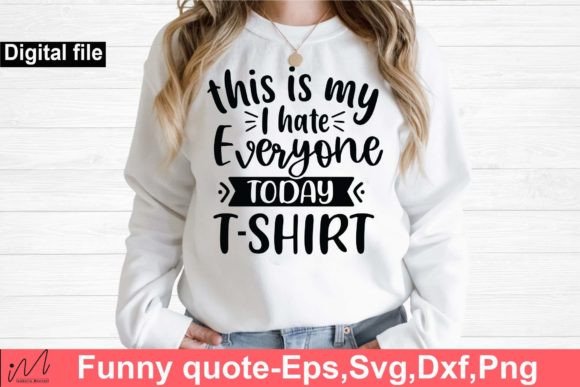
This Is My I Hate Everyone Today Svg Review
As an experienced embroidery designer and product reviewer, I’ve seen my fair share of digital embroidery files. Some are functional and versatile, while others fall flat when it comes to real-world application. When I first downloaded This is My I Hate Everyone Today Svg, I took a moment to evaluate how this design might perform across different projects — from custom apparel to handmade gifts.
First Impressions: Mood and Design Aesthetic
The phrase “This is my I hate everyone today shirt” immediately sets a tone of humor and relatability. It’s the kind of sentiment that resonates well with customers looking for expressive, personality-driven designs. The SVG layout is clean, with bold text and minimal visual clutter, which makes it ideal for both casual wear and decorative items.
What stands out is the balance between simplicity and impact. The design doesn’t rely on intricate graphics or detailed illustrations; instead, it uses typography to make its point. This makes it easy to adapt, especially for crafters who want to tweak colors or add small embellishments. The shape of the letters and spacing suggests a modern, slightly edgy font choice — something that works well for urban-style fashion and witty home décor alike.
Visual Personality and Project Fit
While not overly ornate, This is My I Hate Everyone Today Svg has a strong visual identity. Its straightforward message paired with crisp lines fits perfectly into streetwear-inspired sweatshirts, tote bags, or even embroidered patches. For handmade products, this kind of design adds character without overwhelming the piece. I could see it being used effectively in a boutique setting or as part of an Etsy seller's line of personalized gifts.
The design also lends itself well to holiday gifts and seasonal items. Whether you're creating a sarcastic New Year’s pillow cover or a humorous Christmas apron, this SVG file brings a touch of wit and charm that can elevate your craft business offerings.
Real-World Performance in Embroidery Projects
I tested This is My I Hate Everyone Today Svg on a few common embroidery projects to get a better sense of its versatility. Here’s how it performed:
- Tote bag design: The bold text stitched cleanly on cotton canvas, making it a great fit for reusable bags. The contrast was sharp enough to stand out against darker backgrounds, especially when using light thread colors.
- Sweatshirt embroidery: On medium-weight fleece, the design maintained its clarity and readability. The stitch density felt just right — not too tight, but still holding up after washing.
- Embroidered patch: Converted to a cut applique format, it worked well for iron-on or sew-on patches. The edges were smooth and didn’t fray easily, which is a big plus for hobbyists and small shop product creators.
- Baby clothes: While the phrase may be too adult for infant wear, I did try it on a denim baby jacket for a trendy older toddler look. The results were good, but I’d caution against using it on very thin or stretchy fabrics where fine details might distort.
- Pillow covers and tea towels: These are excellent surfaces for the design. The cotton fabric held the stitches well, and the design added a fun pop of personality to otherwise simple household items.
One thing I noticed is that the design is highly adaptable in terms of color. As an embroidery file, it allows for creative customization — swapping out thread colors can give it a completely new vibe, from vintage pastels to high-contrast monochrome. That flexibility is a huge benefit for digital embroidery file sellers and creative entrepreneurs who want to offer variations to their customers.
Where to Use with Caution
While This is My I Hate Everyone Today Svg is versatile, there are certain scenarios where it might need some tweaking or should be avoided altogether:
- Small hoop sizes: The design includes several characters, so if you’re working with a tight space, consider resizing carefully to avoid cutting off important parts of the quote.
- Textured or stretchy fabrics: The fine details in the lettering may not hold up well on materials like jersey knit or burlap. You’ll need to adjust stitch types or use additional stabilizer to prevent distortion.
- Dark fabric backgrounds: The default white text looks great on dark shirts or bags, but if you choose a similar-colored thread, it can become invisible. Always test on a sample before mass production.
- Curved surfaces: The linear nature of the design means it may not wrap around a curved surface naturally. You may need to split the design or reposition it for optimal placement.
- Frequent-wear items: If you plan to use it on everyday apparel or items that will go through many washes, double-check the stitch count and density. Dense areas can pill over time, reducing the finished product’s longevity.
Design Impact on Product Value and Customer Engagement
From a practical standpoint, this design enhances the visual appeal of almost any project it’s applied to. It brings a sense of humor and attitude that can help differentiate your handmade product from the competition. Customers often appreciate designs that reflect their mood or lifestyle — and this one hits the mark with its candid and tongue-in-cheek message.
For Etsy sellers and craft fair products, the ability to change colors and scale the design is a major asset. You can create multiple versions of the same concept, targeting different demographics based on color schemes and placements. It also pairs well with other design assets, such as floral accents or geometric borders, giving you room to build unique bundles for your customers.
In terms of professionalism and brand consistency, the design maintains a clear and readable appearance — essential for businesses that want to ensure quality in every embroidery project. It’s not too childish, nor too mature, making it a safe bet for a wide range of audiences. However, if you're targeting more refined or corporate markets, you may want to pair it with subtler elements to maintain a balanced aesthetic.
Practical Designer Notes
Before jumping into a full production run or adding this to your catalog of commercial embroidery designs, here are a few tips to keep in mind:
- Test on scrap fabric: Always do a trial run to check how the design reacts to different textures and threads.
- Check thread color contrast: Especially on dark or patterned fabrics, a high-contrast thread (white, black, or metallic) can make all the difference in visibility.
- Review stitch density: Adjust settings to prevent puckering or excessive bulk, particularly on thinner materials or delicate garments.
- Confirm hoop size: Since the exact dimensions aren't provided, resize cautiously and ensure the entire design fits within your machine’s maximum capacity.
- Inspect small details: The corners and curves in the text are subtle but noticeable. If you're scaling down, they may lose clarity, so always verify legibility at smaller sizes.
- Use proper stabilizer: Especially on stretchy or unstable fabrics, backing material is key to preventing misalignment during stitching.
- Consider licensing: Before selling finished products or digital embroidery file downloads, confirm whether the original SVG allows for commercial use. Many free designs come with restrictions.
Final Thoughts for Makers and Merchants
This is My I Hate Everyone Today Svg is a solid addition to any embroiderer’s design library. It’s not flashy, but it speaks volumes in a world where personalization and emotional resonance matter. As long as you’re mindful of fabric choices, placement, and sizing, it can work wonders on everything from custom sweatshirts to embroidered holiday gifts.
Its strength lies in its simplicity — no complicated layers or hidden features to manage. This makes it accessible for hobbyists while still providing enough adaptability for seasoned embroidery designers to incorporate into their workflows. Just remember to tailor it to the right project and audience. With the right approach, this SVG can enhance your crafts and boost buyer engagement in your graphics-based products.
If you’re thinking about adding it to your next batch of design assets, I recommend experimenting with different thread combinations and testing it on a variety of surfaces. Once you find what works best, it can become a reliable staple in your creative toolkit.