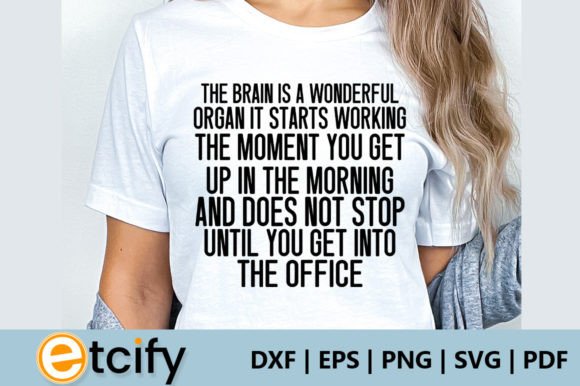
The Brain Is a Wonderful Organ It Starts
When I first opened the embroidery file for “The Brain is a Wonderful Organ It Starts,” I was immediately struck by its lighthearted tone and clever wordplay. This design is not your typical motivational quote—it’s a witty nod to the daily grind, perfect for anyone who needs a little humor in their routine. The layout is clean and balanced, with a bold central message that makes it easy to read even at a glance. As an experienced embroidery designer and product reviewer, I appreciate how this machine embroidery design manages to be both professional and playful without leaning too heavily into either extreme.
A Humorous Yet Timeless Design for Craft Projects
What sets “The Brain is a Wonderful Organ It Starts” apart from other funny work SVG designs is its subtle charm. It doesn’t scream for attention but rather invites a smile from those who get the joke. The text is well-proportioned, with just enough spacing between letters to avoid overcrowding, especially when using satin stitch or decorative fonts. The visual personality of the design feels like it fits naturally into a variety of settings—from casual custom apparel to more refined handmade products.
I can already picture this on a soft tote bag design—a go-to item for office workers or students looking for a bit of levity in their day. It also has potential as an embroidered patch for denim jackets or backpacks, where a smaller version could still deliver the punchline effectively. The versatility of the phrase allows it to work across different craft business niches, whether you're targeting a younger audience or seasoned professionals seeking some fun in their workspace.
Real-World Embroidery Applications
This design is ideal for sweatshirt embroidery, especially if you’re creating personalized gifts or holiday gifts. Its simplicity ensures it won’t overwhelm the fabric, while the humor adds a unique touch that stands out. On cotton blends or stretchy materials like spandex, the text remains legible and the overall look stays crisp, provided the stitching is adjusted properly for the fabric type.
- T-Shirt Designs: Works great as a front-and-center slogan, especially in bold thread colors. Consider using a black background mockup to test visibility before finalizing the placement.
- Baby Clothes & Nursery Decor: A softer, pastel version might feel more appropriate here. Just keep in mind that tiny lettering may not hold up well on delicate fabrics or after multiple washes.
- Caps & Hats: Placement is key. Because of the curved surface, you’ll need to adjust the design slightly to ensure the text reads correctly from all angles. Testing on a scrap cap is highly recommended.
- Pillow Covers & Tea Towels: These are excellent for adding a pop of personality. The flat nature of these items gives the design room to breathe and shine.
- Commercial Embroidery: For small shop products or commercial embroidery projects, this design can serve as a consistent brand element. It’s recognizable and memorable, making it a strong candidate for branding or promotional items.
Design Notes for Practical Use
One thing I always do when reviewing a new digital embroidery file is to run through a few practical tests. First, I check the thread colors against various fabric types. In this case, the design works best with high-contrast threads, especially on dark backgrounds. If you plan to use it on a navy t-shirt or a black tote bag, opt for white or cream-colored threads to maintain clarity.
Stitch density is another important factor. While the design isn’t overly complex, areas around punctuation or smaller letters may require adjustment depending on the machine and fabric used. If you’re using fill stitch or running stitch in certain parts, consider reducing the density slightly to prevent puckering or distortion, particularly on thinner or textured materials.
As for hoop size, I recommend testing the design on a medium-sized hoop (around 6–8 inches) to see how it scales. Since the design includes multiple elements, including spacing for visual balance, scaling down too much could affect readability and impact. Always confirm the minimum recommended hoop size from the file source if available.
For hobbyists and Etsy sellers, it’s crucial to inspect small details like apostrophes or hyphens. These can sometimes disappear in lower-quality prints or when stitched improperly. I suggest using a sharp blade during cutting and ensuring your stabilizer is suitable for the material—especially if you're working with woven or stretchy fabrics.
Where to Use with Caution
- Small Hoop Sizes: The design may lose visual appeal if scaled too small. Test it on scraps before final production.
- Textured Fabrics: Materials like canvas or flannel may obscure fine details. Consider adjusting stitch types or using a heavier thread weight.
- Thin or Stretchy Fabric: Delicate materials can cause distortion or misalignment. Proper backing and tension control are essential here.
- Dense Stitch Areas: Avoid over-stitching in tight corners. This can lead to bulkiness and reduce the lifespan of the garment.
- Dark Fabric Backgrounds: Unless the design uses contrasting thread colors, visibility can be compromised. Always preview in black and white before committing to color choices.
- Curved Surfaces: When placing on caps or curved tumblers, ensure the design is warped correctly to match the contour. Otherwise, the text may appear slanted or unreadable.
Visual Appeal and Brand Value
From a customer perspective, this design offers a sense of relatability and wit. People love humor in their personalized gifts, and having a design that reflects their personality can make all the difference in buyer engagement. Whether it's a gift for a coworker or a branded item for a boutique, the phrase brings a sense of charm and professionalism without being too flashy.
As someone who often creates printable mockups for clients, I find that this design looks equally good in digital previews. It’s clear, readable, and easily adjustable for mockup purposes. That said, for commercial use—like selling finished embroidered products or design assets—it’s vital to verify licensing terms. Many SVG files are for personal use only, so double-check before offering them as part of your craft business offerings or digital downloads.
Designer Tips for Success
- Test on Scrap Fabric: Always do a trial run. Especially if you're planning to sell the finished product, seeing how it holds up after washing is essential.
- Review Thread Contrast: Dark threads on dark fabric won’t cut it. Choose thread colors that enhance the design’s visibility and mood.
- Check Stitch Density: Too dense and it bunches; too loose and it loses definition. Find the sweet spot for each project type.
- Inspect Small Details: Look closely at the finer elements—like the exclamation point or any stylized characters—to ensure they translate well in embroidery.
- Use Proper Stabilizer: Especially important for stretchy or thin materials. A good stabilizer keeps everything in place and prevents warping.
- Confirm Licensing Before Selling: If you plan to include this in an Etsy listing or offer it as part of a digital product bundle, make sure it’s permitted for resale or commercial use.
Final Thoughts from the Cutting Mat
“The Brain is a Wonderful Organ It Starts” is one of those designs that feels instantly familiar yet surprisingly fresh. It’s the kind of applique design that can elevate a basic sweatshirt or tote into something memorable. From a practical standpoint, it’s adaptable and user-friendly, which is why I believe it belongs in every crafters’ digital library.
However, don’t assume it will work perfectly in every situation. Like many embroidery projects, success depends on thoughtful preparation and attention to detail. By taking the time to understand how it behaves under different conditions—whether on a baby onesie or a coffee mug—you’ll be able to use it confidently and creatively.
In short, this design is a smart addition to your collection. With the right approach, it can turn a simple handmade product into a conversation starter, improve product value, and help build customer trust through consistent, quality results. Just remember to adapt it thoughtfully for each project, and you’ll be well on your way to creating standout items for your small shop product line or personal stash.